


Rating:
 (4.2 out of 5)
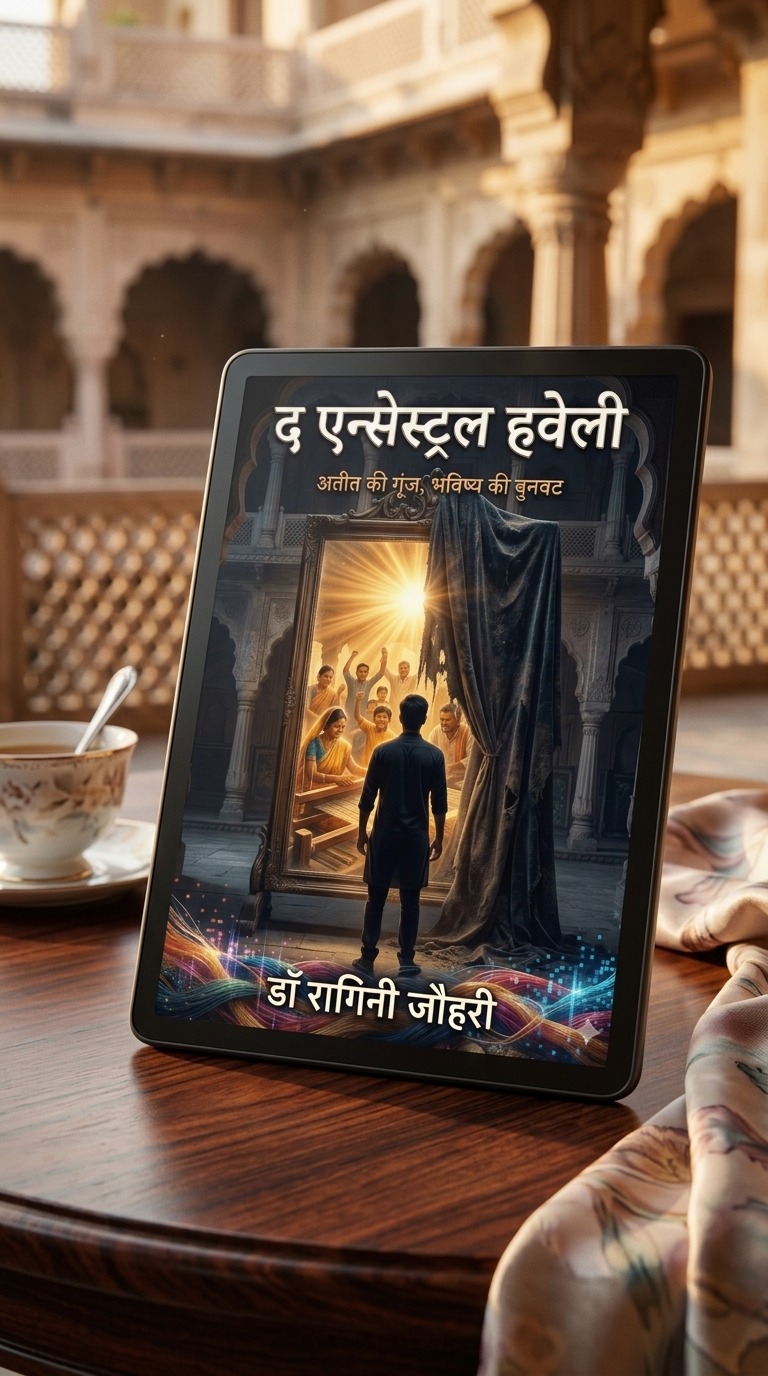
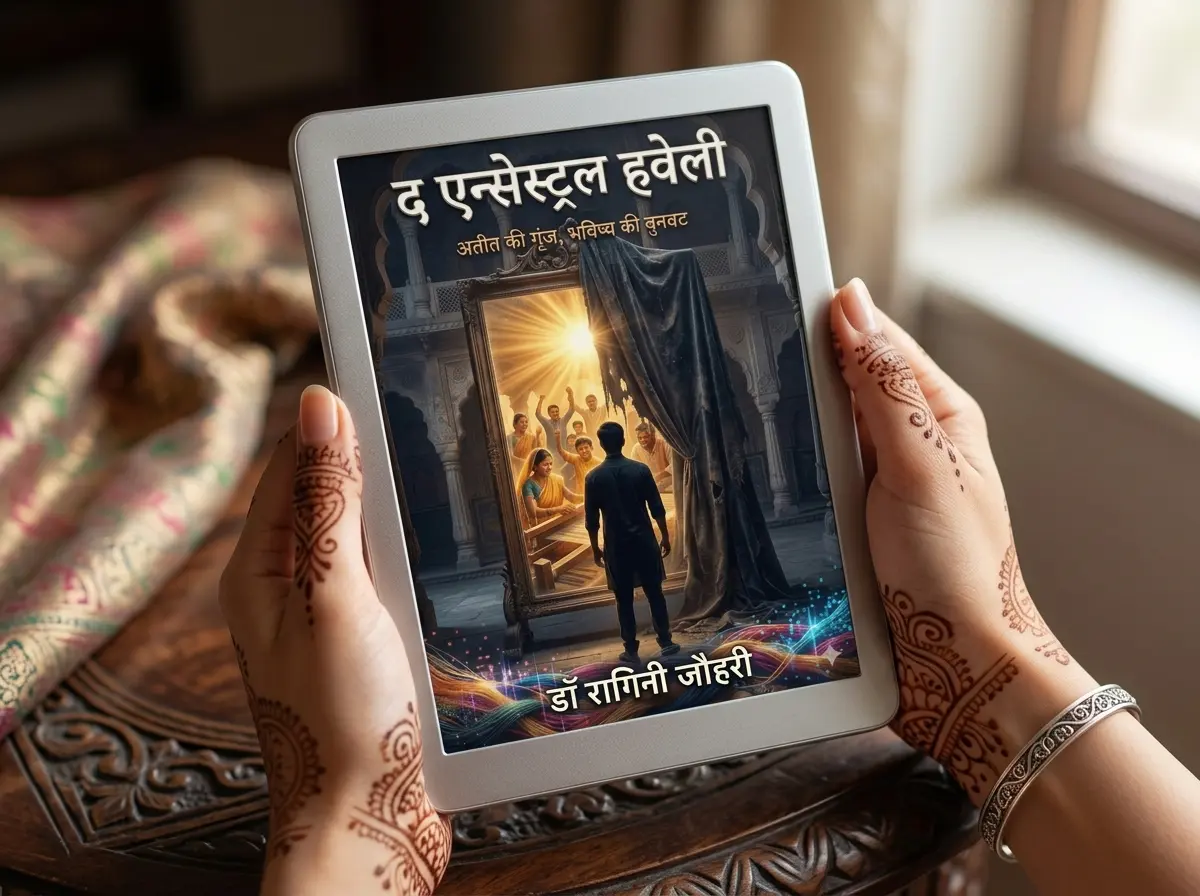
There is something about old havelis that has always unsettled me. I grew up hearing stories about ancestral homes in smaller Indian towns, those enormous, crumbling buildings where the walls seem to breathe and every room holds a different version of a family’s past. My mother always said that a haveli doesn’t just house people, it houses everything they couldn’t say out loud. I thought about that line more than once while reading Dr. Ragini Johari’s “The Ancestral Haveli,” a Hindi serial novel published on Pratilipi that has been building a dedicated readership, and honestly, I understand why.
This is a book that opens in November 2011, at 3 AM, inside a room in Haveli Number 7 of the Ancestral Haveli in Ratanpur. That specific time and that specific setting are not accidents. Johari places us in the dead of night deliberately, inside a space where the cold that freezes bones is already pressing against the walls from outside, where the rustle of dry leaves sounds like ancient creatures whispering, and where the very land seems to carry the grief of something old and unresolved. Before a single character speaks, you already know this house is alive in the way that matters most in Indian gothic fiction: it remembers.
What This Story Is About
“The Ancestral Haveli” centers on Kabir, a Delhi architect who is successful on paper but drowning in debt in reality. He comes to Ratanpur to sell his ancestral haveli, a property that represents both his family’s past and, he hopes, his financial future. The plan is simple: sell the house, clear the debt, move on. But Ratanpur and the haveli have other plans for Kabir entirely, and what begins as a transactional visit becomes something far more complicated, personal, and emotionally demanding.
The story is structured as a serial with multiple chapters, and Johari moves between timelines with confidence. The first chapter, titled “The Mirror’s First Fog,” establishes the haveli and its current occupant, the aged Deenanath Babu, an old man sitting alone in a hall lit by a single yellow lamp, surrounded by the smell of oil, old papers, and the smoke of a clay chimney. This opening scene is one of the most carefully constructed pieces of atmosphere I’ve encountered in recent Hindi fiction. Johari doesn’t rush to introduce the plot. She lets the house breathe first, lets you feel its weight before she asks you to care about the people inside it.
Chapter two, “The Spreading City,” shifts to Delhi, showing us Kabir’s life in the year before his return to Ratanpur. Johari sketches the texture of Delhi’s real estate and architectural world with genuine insider detail: the professional competition, the financial pressure, the gap between creative ambition and commercial survival. Kabir is not a cartoon villain or a flawless hero. He’s a man who made choices that seemed reasonable at the time and is now paying for them in ways he didn’t anticipate. There’s a realism to his situation that makes you root for him even when you’re not entirely sure he deserves it.
Chapter three, “Return After Fifteen Years,” brings Kabir back to Ratanpur, and this is where the novel starts to show its real ambitions. The fifteen-year gap between Kabir’s last visit and his return is filled with implication rather than exposition. Johari trusts her reader to feel the weight of that absence without having it spelled out in detail. When Kabir arrives and sees how the town has changed, how the haveli looks in daylight versus how it exists in his memory, there’s a particular kind of sadness in that recognition that I think most Indian readers will find familiar. We’ve all had the experience of returning somewhere after years away and finding that the place has changed less than we have, or more, and either way it’s disorienting.
What Stood Out to Me While Reading
The character of Deenanath Babu is the heart of this novel’s first section, and I think he’s the most genuinely interesting figure Johari has created so far. He’s a man who has outlived his usefulness in the eyes of everyone around him. The entire district has declared him a failed caretaker and a fraudster. His legal documents have been tampered with in ways that have stripped him of any legitimate path out. The people who once looked to him now look through him. And yet inside the haveli, in front of that enormous mirror in the main hall, something in him refuses to give up. The scene where he covers the mirror with a large velvet cloth and issues what amounts to a quiet command to Kabir’s absent presence, “Until Kabir returns, no one should see their reflection in this mirror. This mirror doesn’t just show faces, it protects the truth of the coming future. My son will come, and one day he will understand the soul of this house,” is the kind of moment that you keep thinking about days after you’ve read it. It’s theatrical but not melodramatic, because Johari has earned it through the slow accumulation of detail that precedes it.
The typewritten note that Deenanath Babu composes on an old typewriter before covering the mirror is also worth noting: “Dust on the mirror, not the mind. Kabir, what you see in this mirror is not the truth of this house. The thief is the one inside you.” That line is doing a lot of work. It sets up the psychological undercurrent of the entire novel, this idea that the haveli’s secrets are not just external or historical but internal, that Kabir’s reckoning with his ancestral home is also a reckoning with himself. In my years of reviewing Hindi fiction at Deified Publication, I’ve read enough family saga novels to know that the ones that work are always the ones where the house and the protagonist are mirrors for each other. Johari clearly understands this.
The Delhi chapters are equally well-observed. The description of Kabir’s professional world is specific in a way that feels lived-in rather than researched. His relationship with a colleague named Ridhima, his financial calculations about what the haveli might fetch, his complicated feelings about returning to a place he deliberately left behind, all of this is rendered with the kind of psychological accuracy that makes fictional characters feel like people you might actually know. There’s a moment in the Delhi chapter where Kabir is calculating property values in Ratanpur and someone mentions that the rate there is around 80,000 rupees per square yard, and he begins doing the math on what selling would mean financially. It’s a very mundane, very human moment in a novel that could easily have leaned entirely into gothic atmosphere, and it anchors everything else.
The return chapter introduces what feels like a romantic subplot alongside the mystery of the haveli’s history, and Johari handles this with a lightness that keeps it from overwhelming the larger story. There’s a young woman at the haveli gate who turns out to be connected to Deenanath Babu’s granddaughter, Deenanath Babu’s granddaughter herself has a confidence and directness that reads as immediately engaging, and Kabir’s first interactions with both of them carry that particular tension of someone returning to a place where relationships were left unresolved. It made me wonder, in a good way, how much of what Kabir finds in Ratanpur is new and how much has been waiting for him.

The Emotional Core of the Novel
What “The Ancestral Haveli” is really about, underneath the architecture of a mystery and the framework of a family saga, is the cost of leaving. Not the dramatic, story-worthy kind of leaving, but the ordinary kind that most of us do without thinking: the city you grew up in, the relatives you meant to visit more often, the house that holds your family’s history and that you’ve been telling yourself you’ll deal with eventually. Kabir represents a very specific kind of modern Indian experience, the educated professional who has built a life in a metro city and in doing so has gradually severed the emotional threads that tied them to where they came from. The haveli doesn’t let him sell it easily not because of supernatural obstruction but because the house is asking him to remember things he’d rather not.
I found the emotional beats of this novel genuinely affecting, particularly the relationship between Deenanath Babu and his absent sense of Kabir. There is something in an old man maintaining faith in someone who hasn’t come back that feels universal and specifically Indian at the same time.
Who This Novel Is For
If you read Hindi fiction and have been looking for something that combines the atmospheric qualities of a mystery with the emotional texture of a family drama, “The Ancestral Haveli” by Dr. Ragini Johari is exactly what you’re looking for. It has that quality of a story told by someone who knows their characters deeply, not just their circumstances. Readers who grew up in smaller Indian towns and have complicated feelings about the ancestral properties their families left behind will find something personally resonant here. Fans of serial fiction on Pratilipi will appreciate the chapter-by-chapter pacing, which builds momentum without rushing.