


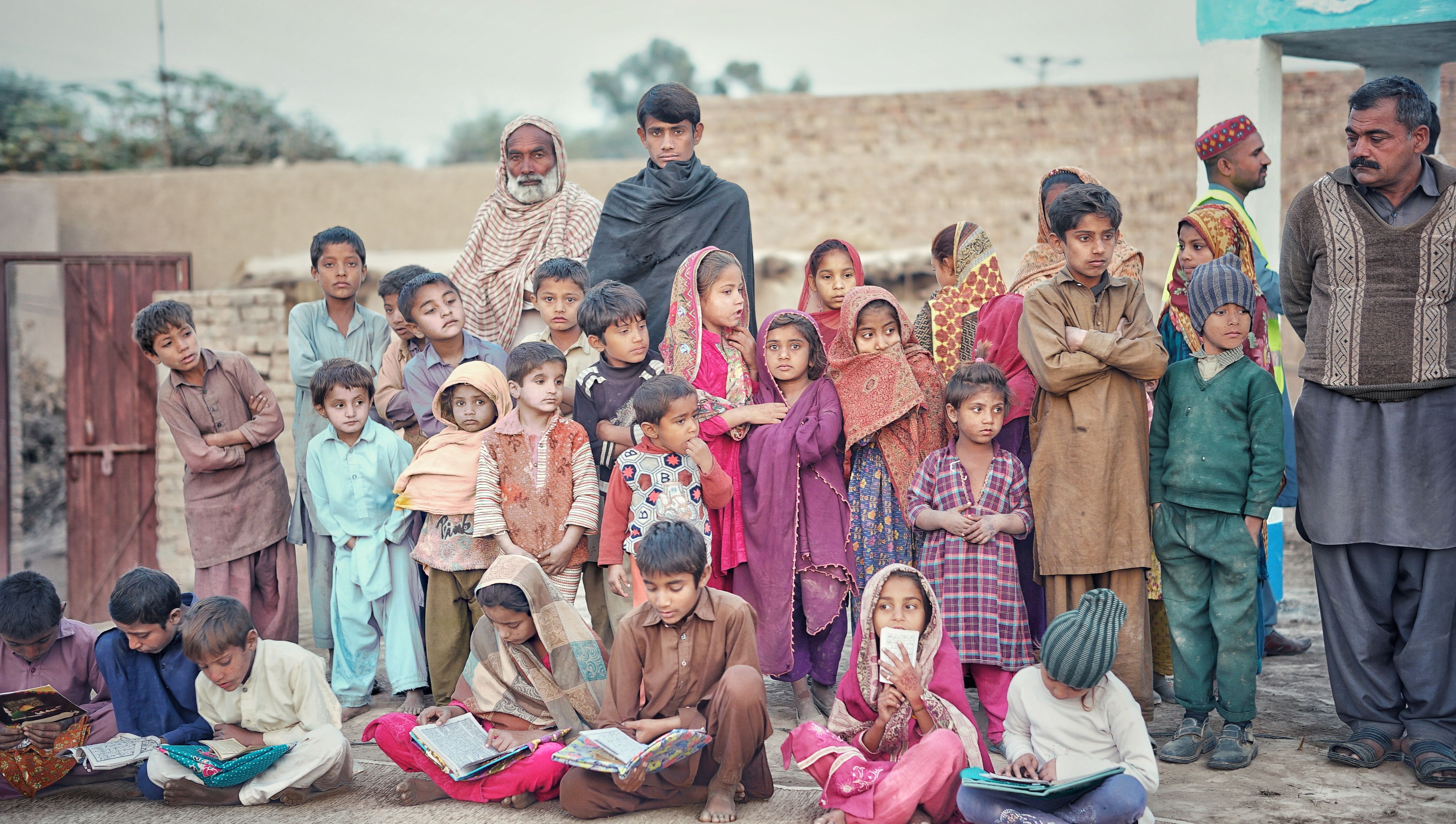
She was thirteen when her father decided she did not need to finish school.
He was not a bad father. He was a worried one. The school was four kilometres away. The road was not safe after dark. He had a proposal for her already, from a decent family, and in his mind, the two things, her safety and her future, were tied to the same solution.
She got married at fifteen. By seventeen, she had a daughter of her own.
I have met versions of this girl in more communities than I can count. And the thing that stays with me is not the sadness of the individual story, which is real and heavy enough. What stays with me is that her daughter is now seven years old. And her daughter is already living in a house where the idea that a girl's education is optional has been passed down like furniture.
In India, a girl drops out of school earlier than a boy not because she is less capable but because the system around her was designed for boys. No safe toilet in school. No female teacher in the upper grades. No conversation at home about what she might become, only about who she might marry.
The numbers behind this are not abstract. A girl who does not finish secondary school is far more likely to marry before 18. She is more likely to have complications in pregnancy. She is less likely to know what legal rights she has, less likely to earn her own income, less likely to make independent decisions about her own health.
And her daughter is less likely to finish school either.
This is not fate. This is a pattern. And patterns, unlike fate, can be broken.
Government programmes like Beti Bachao Beti Padhao and Sukanya Samriddhi Yojana have done important work, changing sex ratios in certain districts, putting financial weight behind girls' education, building savings mechanisms for families who would otherwise spend that money elsewhere. But a scheme reaches a bank account. It does not always reach the conversation a father has with himself at night when he is deciding whether his daughter needs to keep going to school.
That conversation is changed by something closer to home. A woman in the same neighbourhood who is earning. A workshop where a girl realises her own curiosity is worth something. A volunteer who sits with a family and speaks to them not about data but about what their daughter could actually do with her life.
At Udaan Foundation, this is the work we show up for. Not the policy work, which matters but belongs to others. The community work. The showing-up-in-person work. The kind where you sit across from a mother and ask her what she dreamed of when she was her daughter's age.
A girl who stays in school earns more. She marries later by choice. She has fewer children and healthier ones. She is less likely to face domestic violence. She goes to the doctor when something feels wrong instead of waiting to be told it is serious enough to deserve attention.
She also does something that no statistic captures properly. She becomes a person her daughter watches. And her daughter learns, without being told, that staying in school is what women in this family do.
That is the one thing we are most trying to protect. Not a number. A belief. The belief, inside one girl, in one town in Uttar Pradesh, that her education belongs to her and nobody else gets to decide when it ends.